

Vanilla Bean Caramel Cake
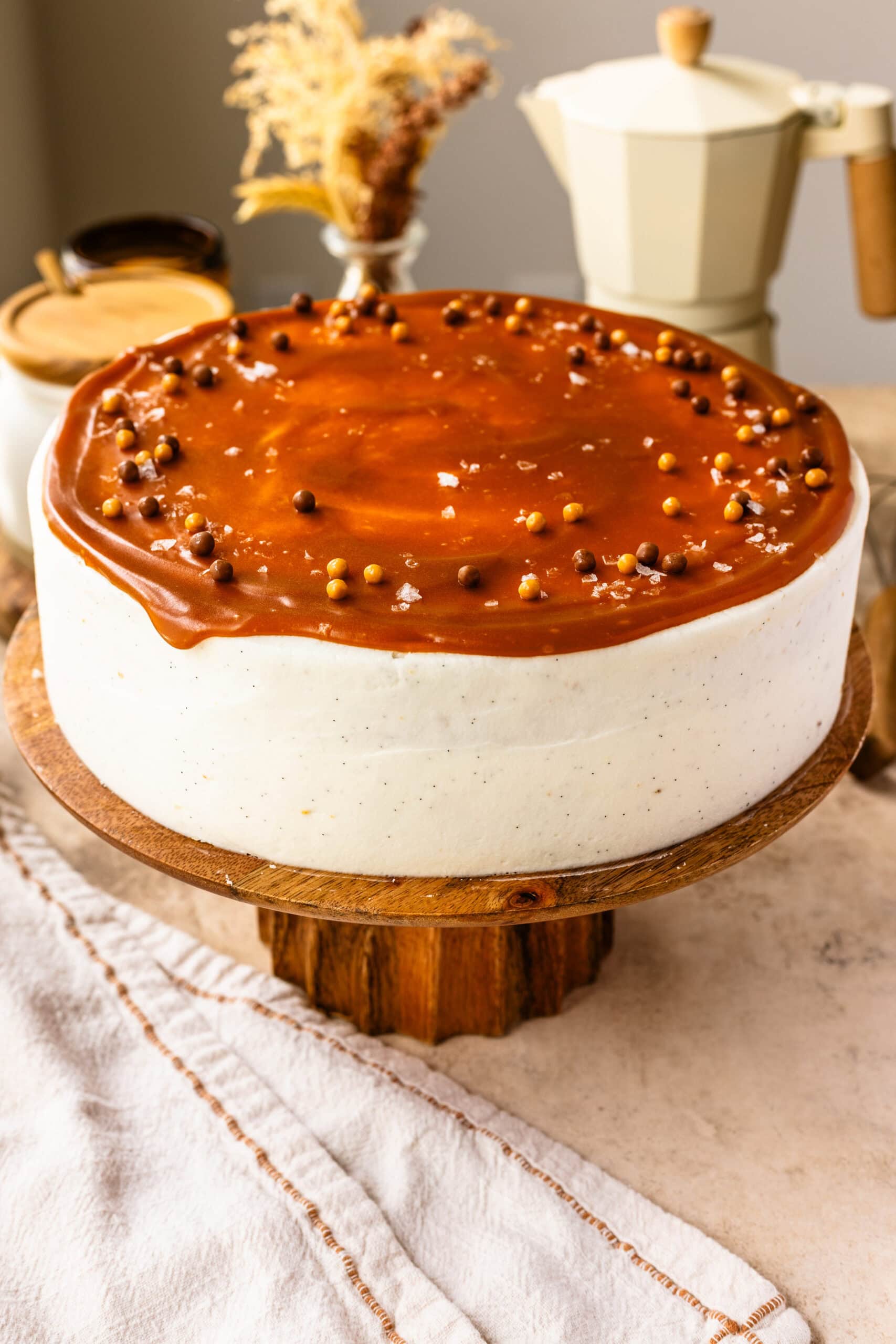
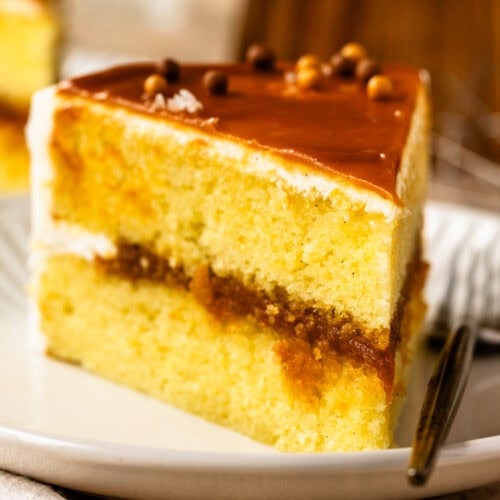
This Vanilla Bean Caramel Cake has soft buttermilk cake layers, vanilla bean cream cheese buttercream, and homemade caramel sauce between the layers and over the top. I add a little sea salt at the end because it balances the sweetness and makes the vanilla and caramel flavors stand out even more.
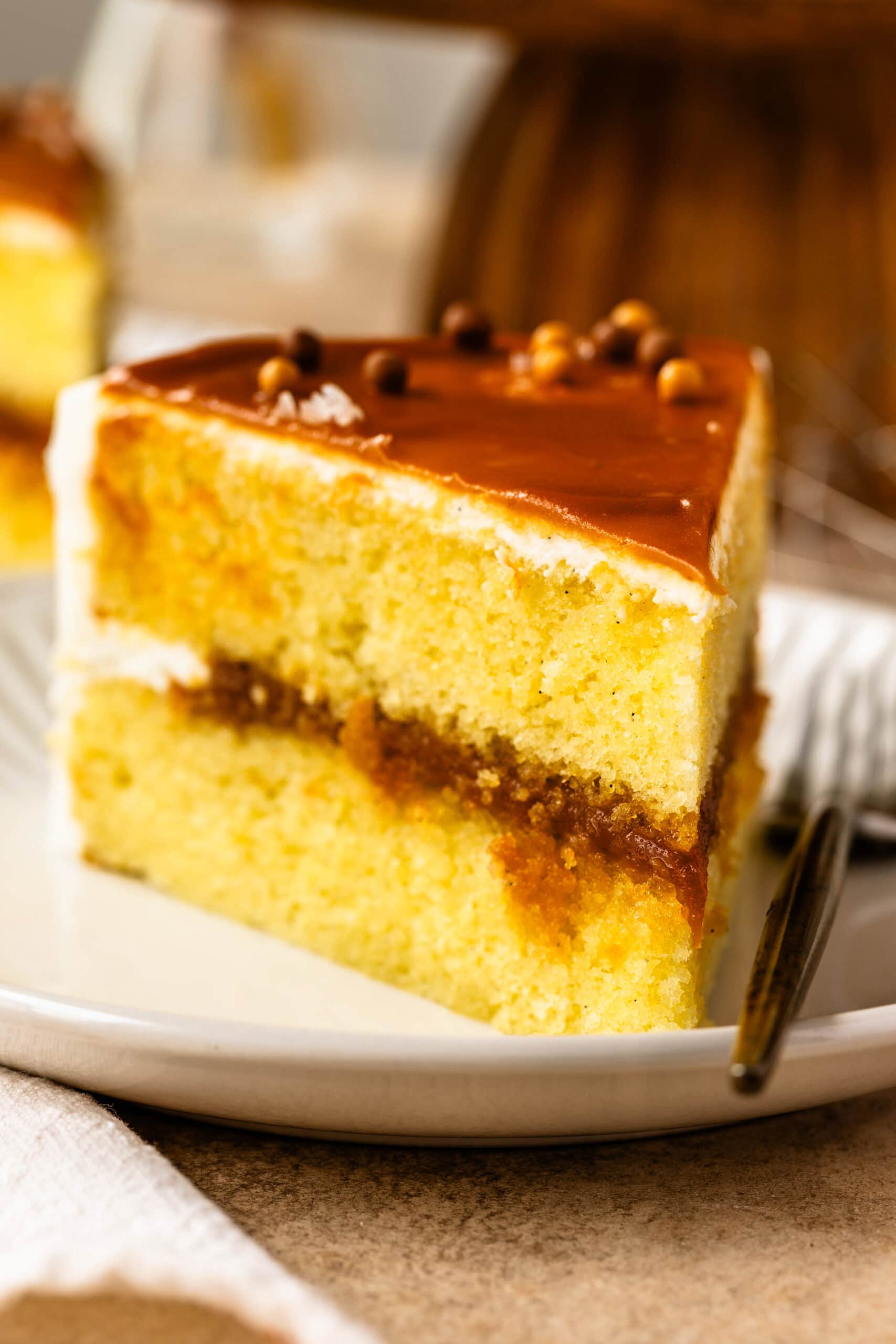
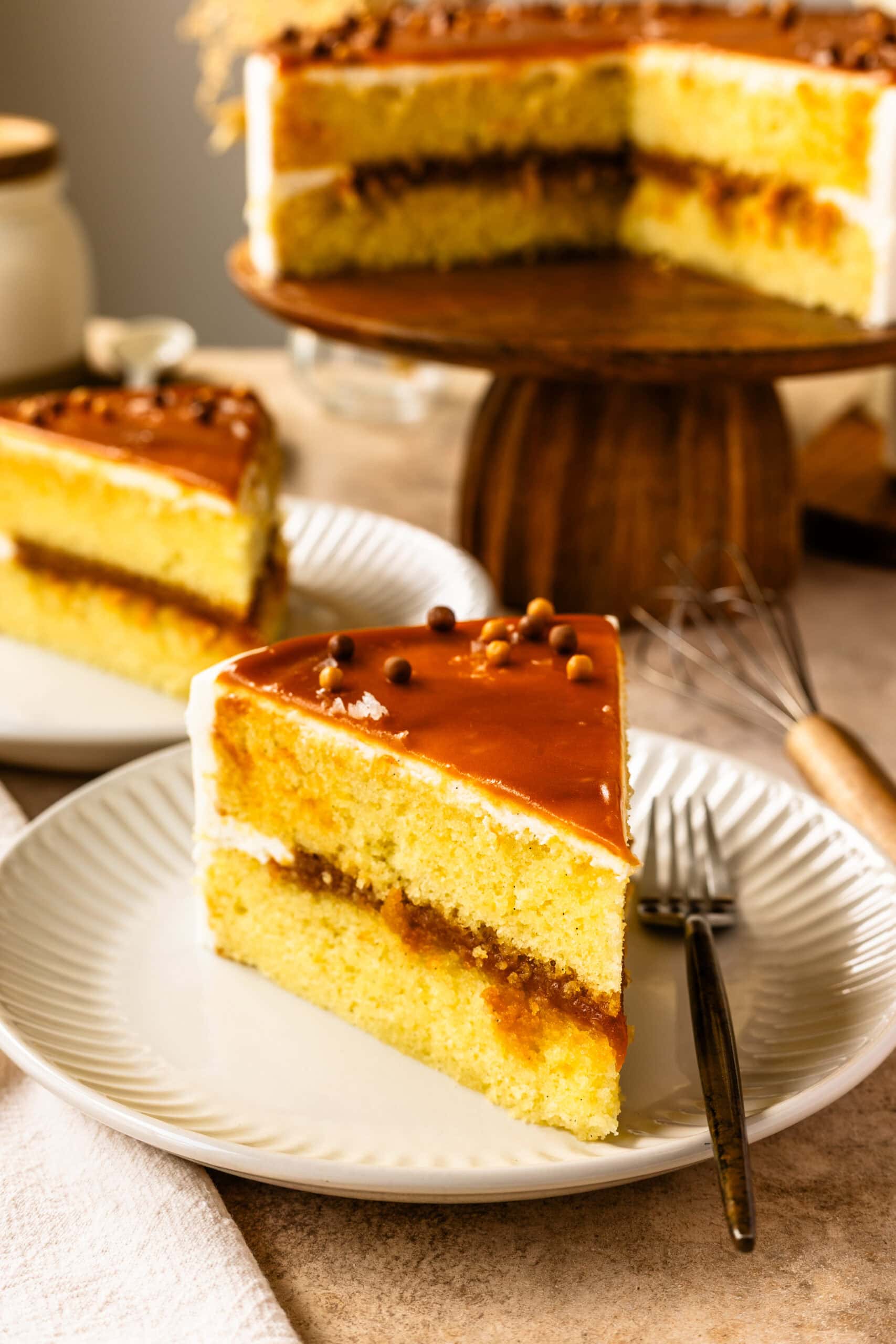
The cake layers are buttery but still light, and the combination of butter and oil helps them stay moist after chilling. Once the cake is assembled, the caramel filling settles slightly into the layers, giving each slice plenty of caramel without making the cake difficult to stack.
Why You’ll Love This Cake
This is a great cake to make when you want something classic, but with a little more flavor and detail than a basic vanilla layer cake.
This post may contain affiliate links. I earn a commission from qualified purchases. Please read our Privacy policy here.
- Soft and moist vanilla cake made with buttermilk
- Caramel sauce between the layers and over the top
- Vanilla bean buttercream with visible vanilla specks
- A balance of sweet caramel and flaky sea salt
- Cake layers and caramel can both be prepared ahead
- The finished cake slices cleanly once properly chilled
Key Ingredients
Butter and oil: I use both in the cake batter because they do different jobs. Butter gives the cake its flavor, while oil helps the layers stay soft and moist, especially after refrigeration.
Buttermilk: The buttermilk adds moisture and a slight tang that balances the sweetness. Its acidity also works with the baking soda to give the cake a lighter texture.
Vanilla extract: Vanilla is the main flavor in the cake layers, so I recommend using a good-quality pure vanilla extract.
Vanilla bean: I use the seeds from a vanilla bean in the buttercream. They give the frosting a deeper vanilla flavor and add the tiny specks throughout the frosting.
Cream cheese: The cream cheese softens the sweetness of the buttercream and gives it a smoother, slightly tangy flavor. This is not a full cream cheese frosting, so it still has enough structure for filling and decorating the cake.
Caramel sauce: Make sure the caramel is completely cool before filling or dripping the cake. Warm caramel can melt the buttercream and cause the cake layers to slide.
Sea salt: A small amount of flaky sea salt brings contrast to the caramel. I usually add it lightly so it does not overpower the vanilla.
How to Make Vanilla Bean Caramel Cake
The full ingredient amounts and instructions are in the recipe card below, but here is how I prepare each part of the cake.
Prepare the Batter Base
Preheat the oven to 350ºF. Grease two 9-inch round cake pans and line the bottoms with parchment paper.
In a medium bowl, whisk together the flour, baking powder, baking soda, and salt. Set the bowl aside.
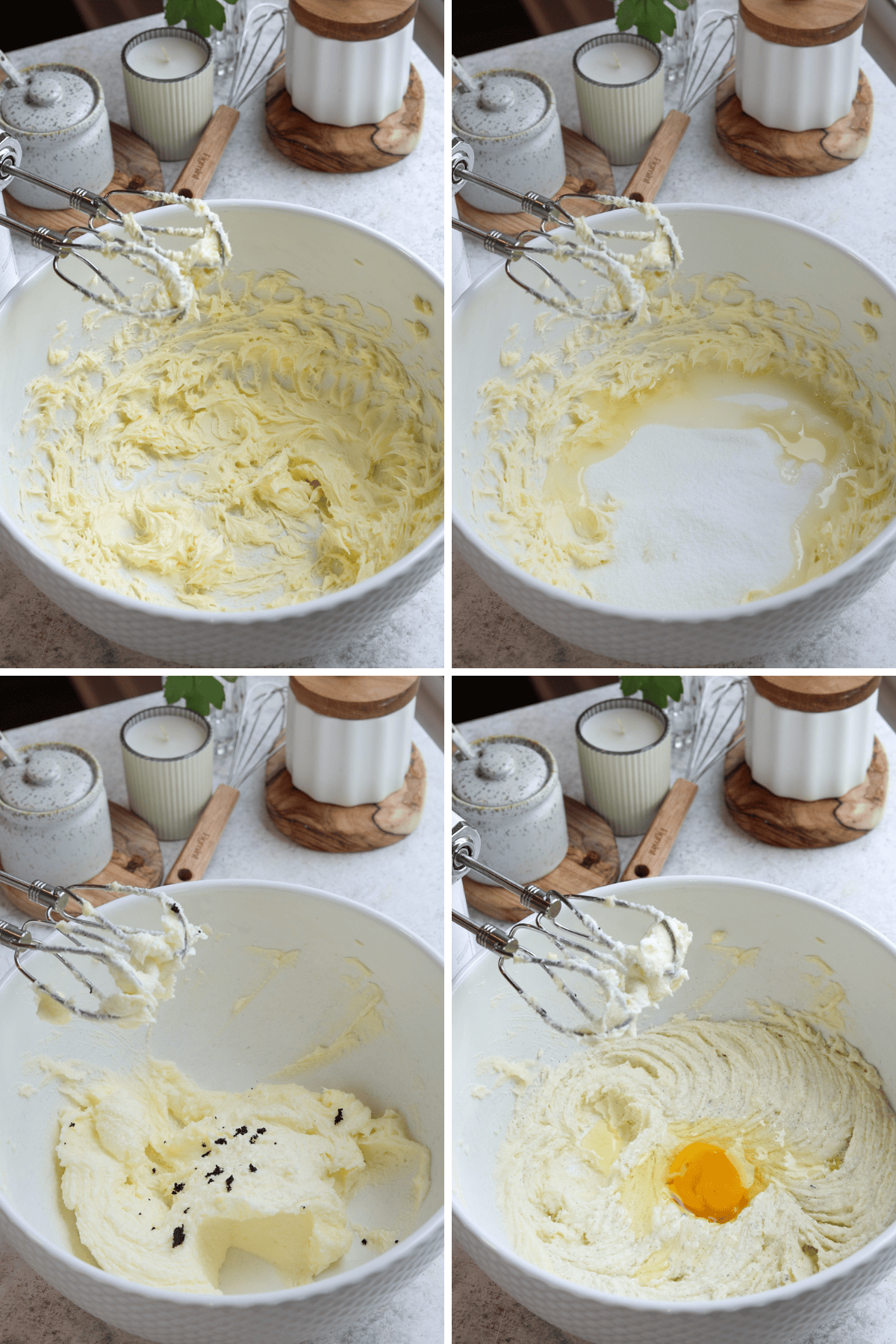
Add the softened butter, oil, and sugar to the bowl of a stand mixer fitted with the paddle attachment. Beat for about 2 minutes, until the mixture looks pale and fluffy.
Add the eggs one at a time. Let each egg mix into the batter before adding the next, and scrape the bottom and sides of the bowl between additions. Add the vanilla extract and mix to combine.
Combine Wet and Dry Ingredients
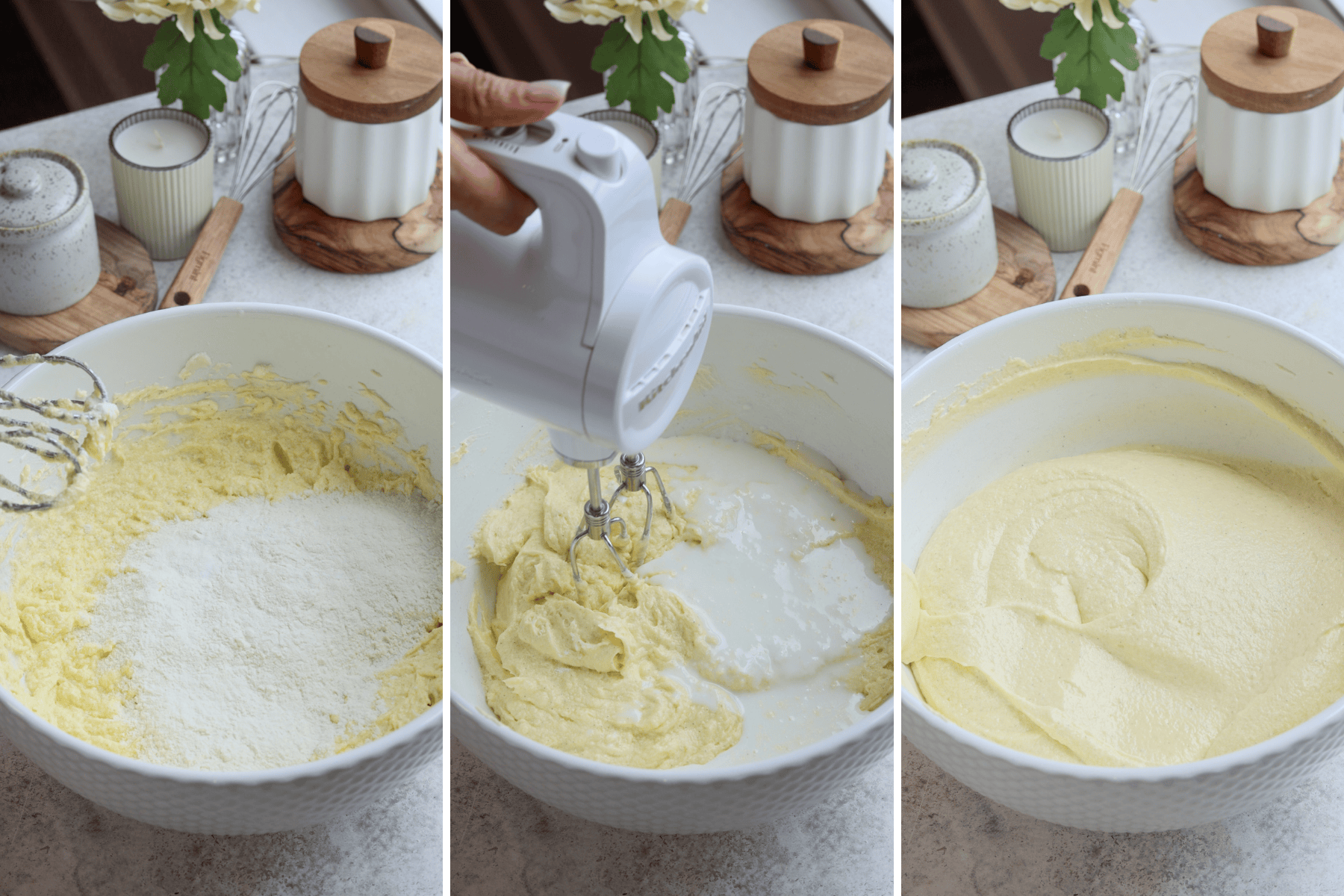
With the mixer running on low speed, add one-third of the buttermilk, followed by one-third of the dry ingredients. Continue alternating between the buttermilk and flour mixture, ending with the dry ingredients.
Mix only until the flour is mostly incorporated. I finish folding the batter with a spatula so I can scrape the bottom of the bowl without overmixing it.
Divide and Bake
Divide the batter evenly between the prepared pans. Bake for about 30 minutes, or until a toothpick inserted in the center comes out clean.
Allow the cakes to cool in the pans for 10 minutes. Turn them out onto a wire rack, remove the parchment paper, and let them cool completely before frosting.
If you are not assembling the cake the same day, wrap the cooled layers tightly in plastic wrap. Refrigerate them for up to 2 days or freeze them for longer storage.
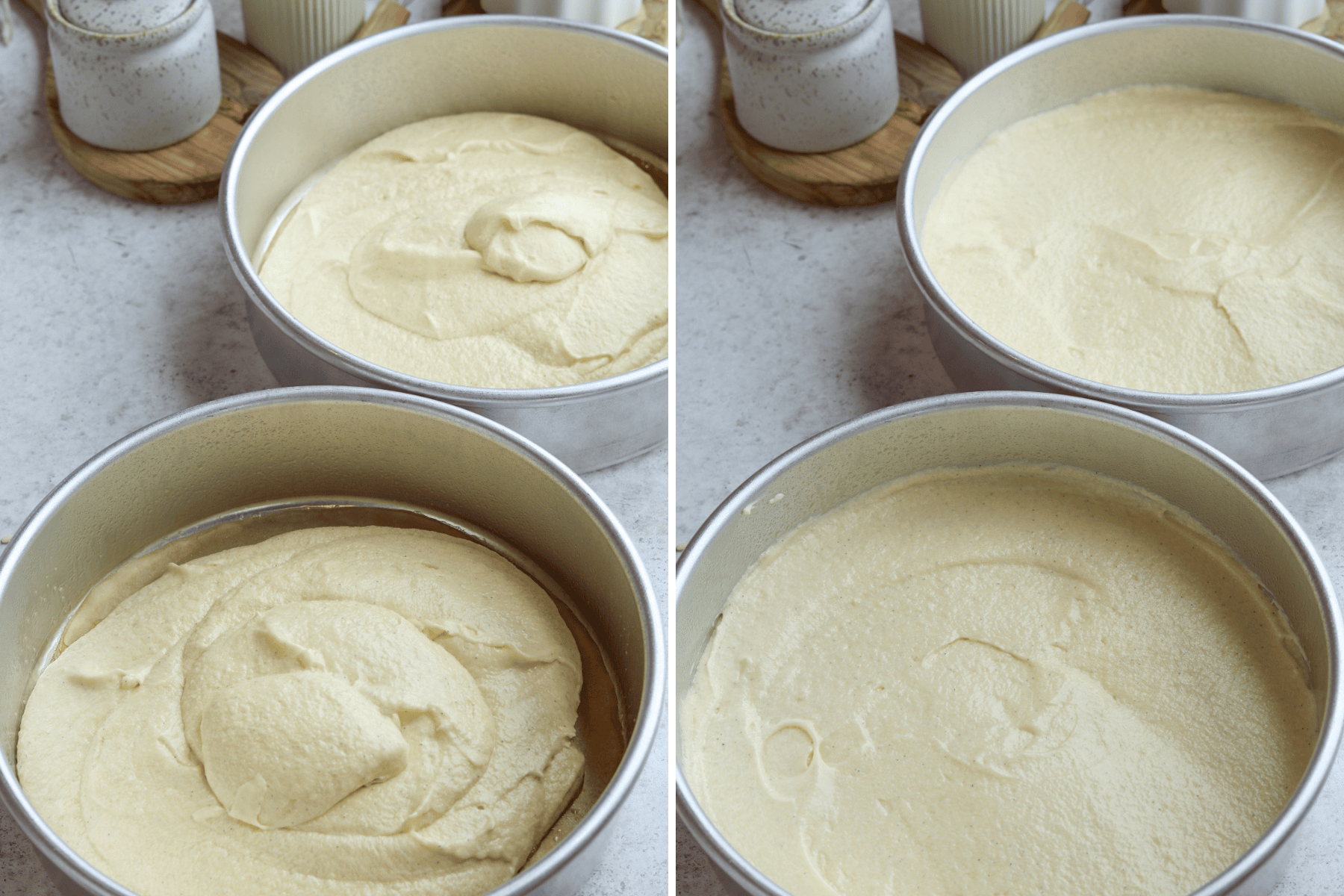
Prepare the Caramel Sauce
Prepare the caramel sauce according to the recipe instructions and let it cool completely before using it in the cake.
You can add salt to the caramel if you prefer a salted caramel filling. Keep in mind that I also finish the cake with sea salt flakes, so you may want to use a little less salt in the sauce.
The caramel can be made several days ahead and stored in the refrigerator. Before using it, warm it for a few seconds at a time until it is pourable.
Do not heat it until it is hot or very thin. For filling and dripping, the caramel should flow slowly from a spoon and still hold some body.
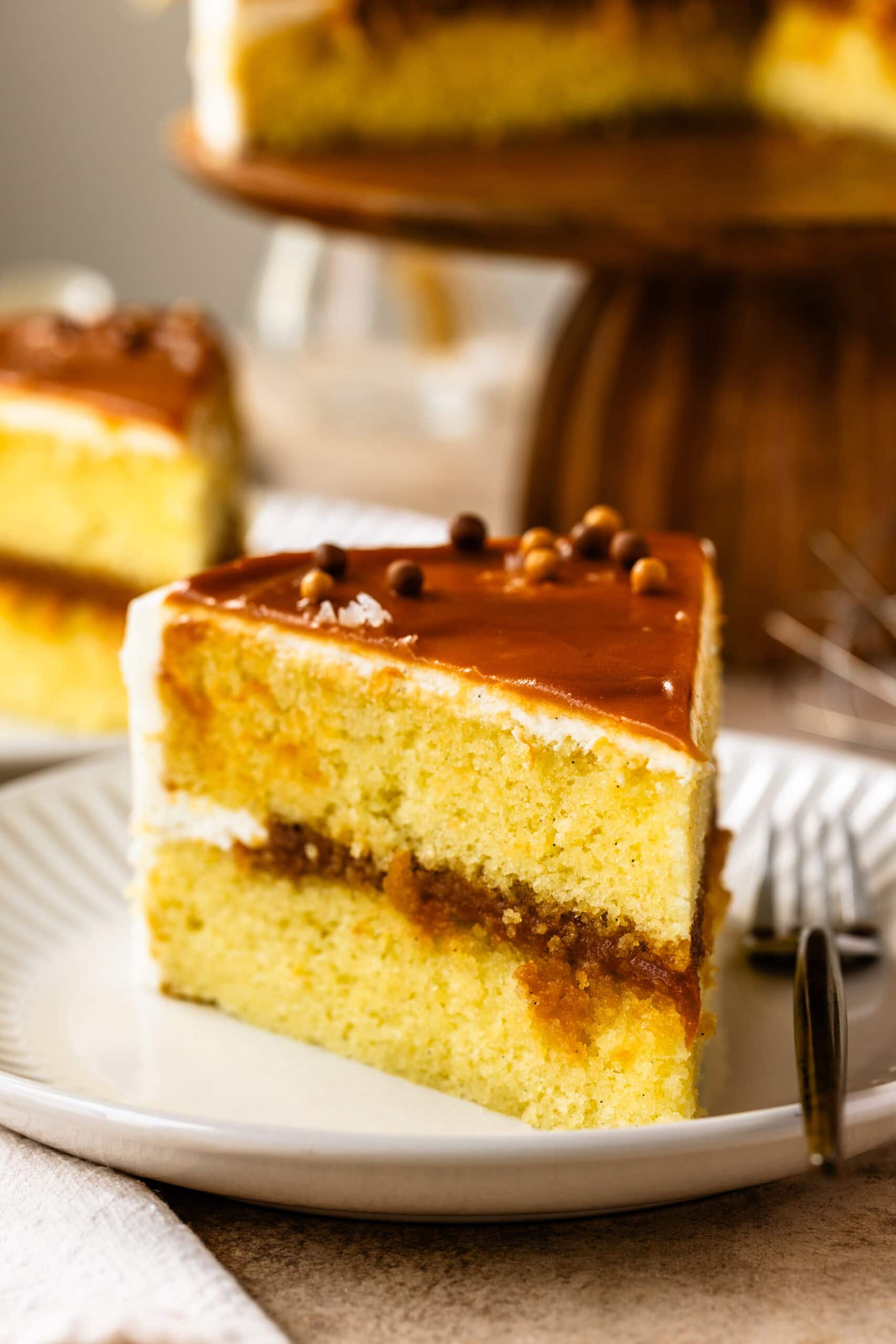
Make the Vanilla Bean Buttercream
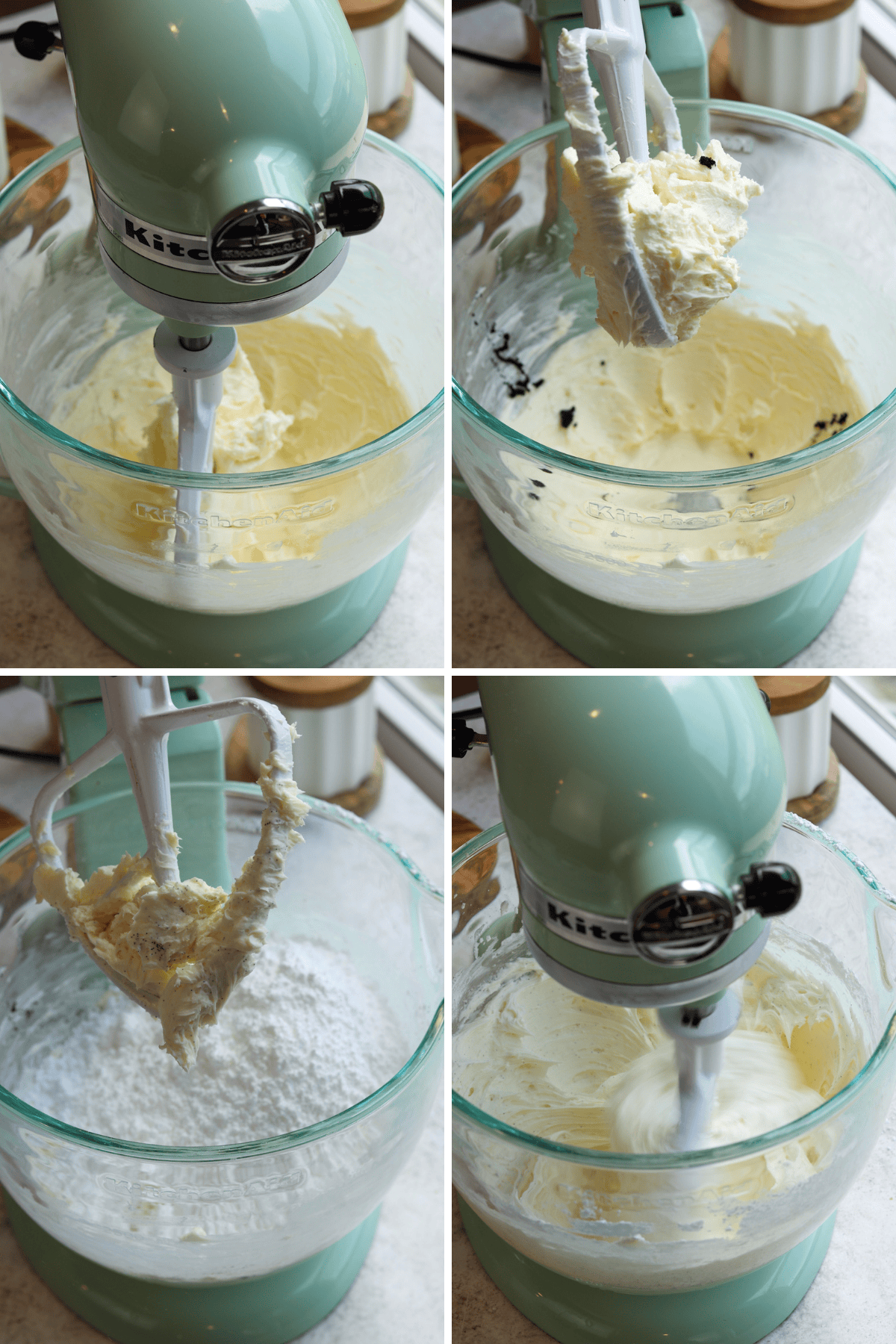
Add the softened butter to the bowl of a stand mixer fitted with the paddle attachment. Beat for about 2 minutes, until smooth and creamy.
Add the softened cream cheese and mix for another minute. Scrape the bowl to make sure no pieces of butter or cream cheese are sitting at the bottom.
Split the vanilla bean lengthwise and scrape out the seeds. Add the seeds to the buttercream and mix until they are evenly distributed.
With the mixer on low speed, add the sifted powdered sugar about one cup at a time. Scrape the bowl frequently as you work.
Once all the powdered sugar has been added, increase the mixer to medium-high speed and whip the frosting for 1 to 2 minutes, until fluffy.
Add the vanilla extract and salt, then mix again.
Pro Tip
If the buttercream is too soft to hold its shape, add a little more powdered sugar. If it feels too thick, add milk or heavy cream one teaspoon at a time. Small additions are enough here, especially because the cream cheese already makes the frosting softer.
Assembling the Cake: Fill and Stack the Layers
Place one cake layer on a cake board, serving plate, or cake stand. If the top is domed, level it with a serrated knife.
Pipe a thick border of vanilla bean buttercream around the outside edge of the cake. This creates a dam that keeps the caramel from leaking out between the layers.
Spoon about 1/2 cup of cooled caramel sauce inside the buttercream border. Spread it evenly, leaving the buttercream dam intact.
Place the second cake layer on top. Press it down very gently to secure it without pushing the caramel through the sides..
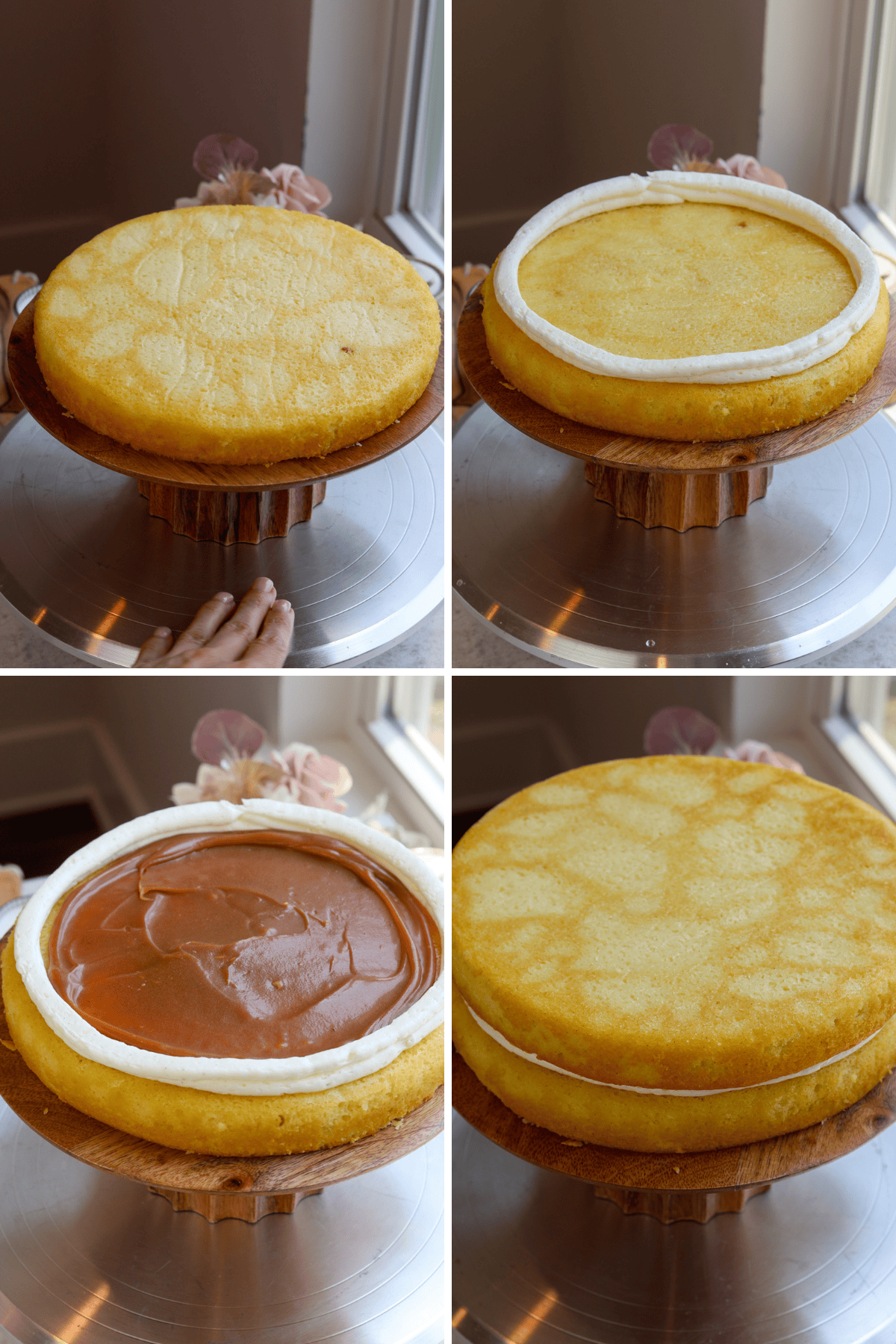
Crumb Coat and Final Frosting
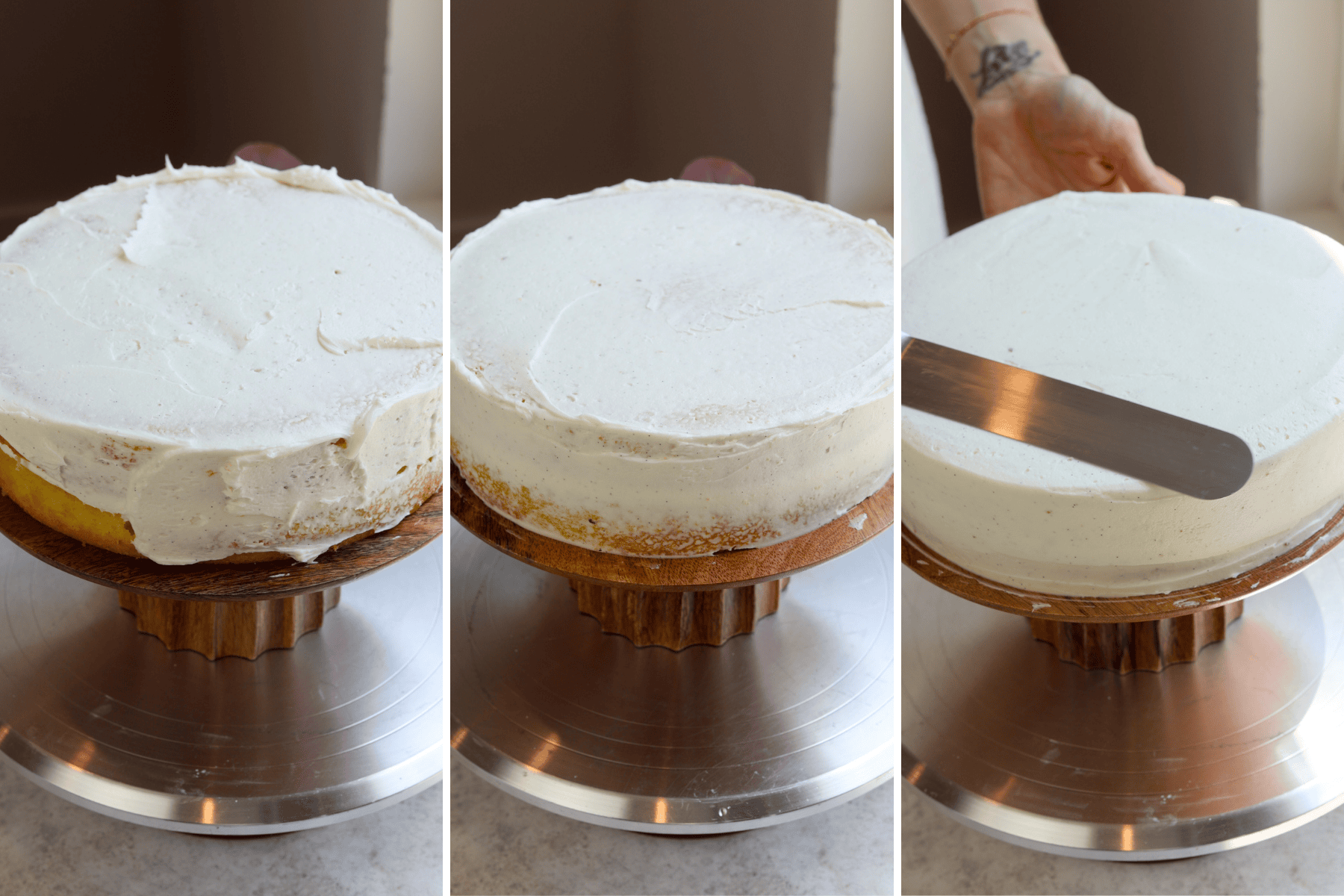
Spread a thin layer of buttercream over the top and sides of the cake to create a crumb coat. Refrigerate the cake for about 20 minutes, or until the frosting feels firm.
Apply a thicker final layer of buttercream. Smooth the sides with a bench scraper and the top with an offset spatula.
Refrigerate the frosted cake for at least 30 minutes before adding the drip. The frosting needs to be cold so the caramel stops as it runs down the sides instead of sliding all the way to the bottom.
Add the Caramel Topping
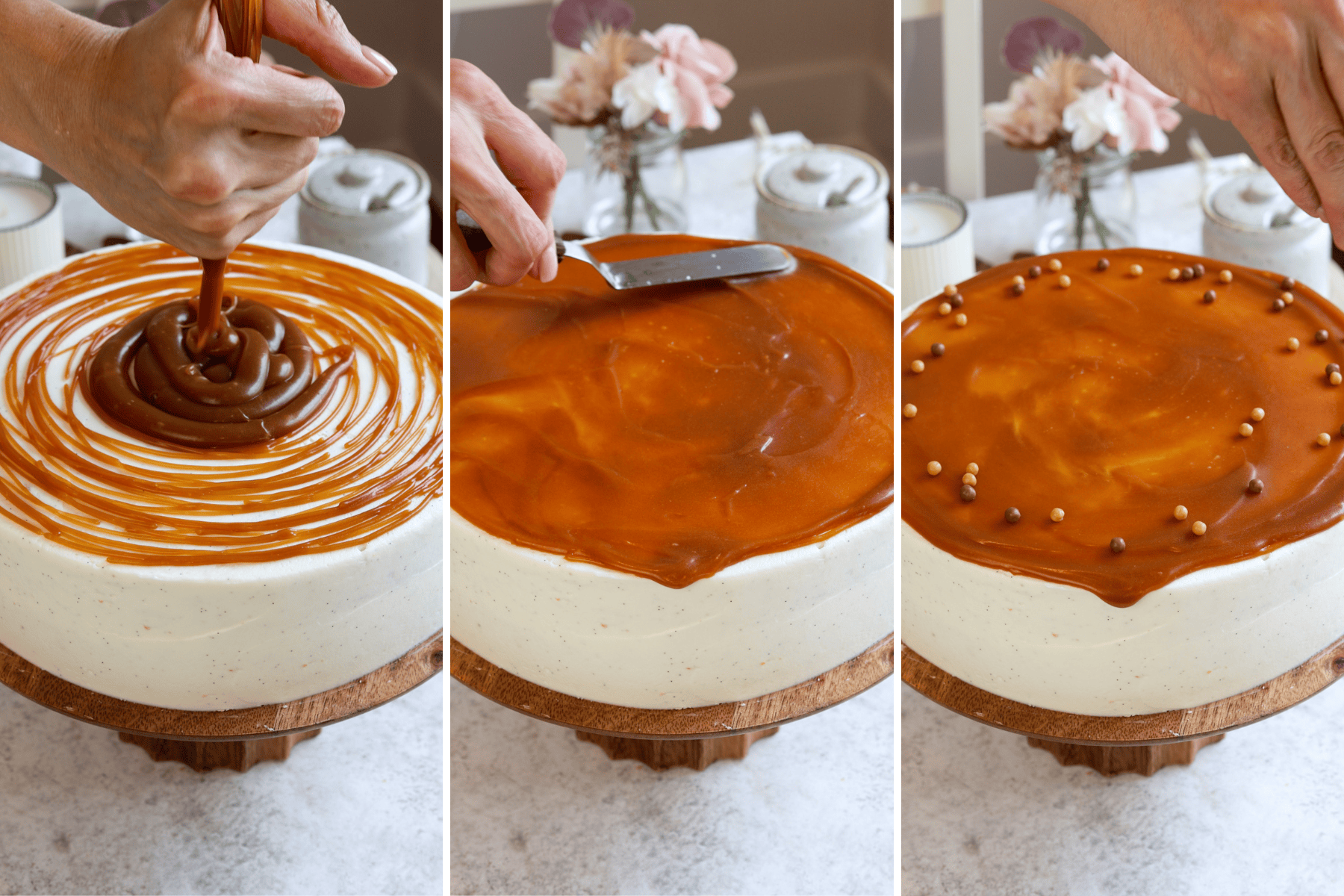
Check the caramel consistency before adding it to the cake. It should be cool and pourable, but not watery.
I like to test one small drip on the back of the cake first. If it runs too quickly, the caramel is too warm or too thin. Let it cool longer before continuing.
Spoon the caramel around the outside edge of the cake, encouraging small drips down the sides. Spread additional caramel over the top with an offset spatula.
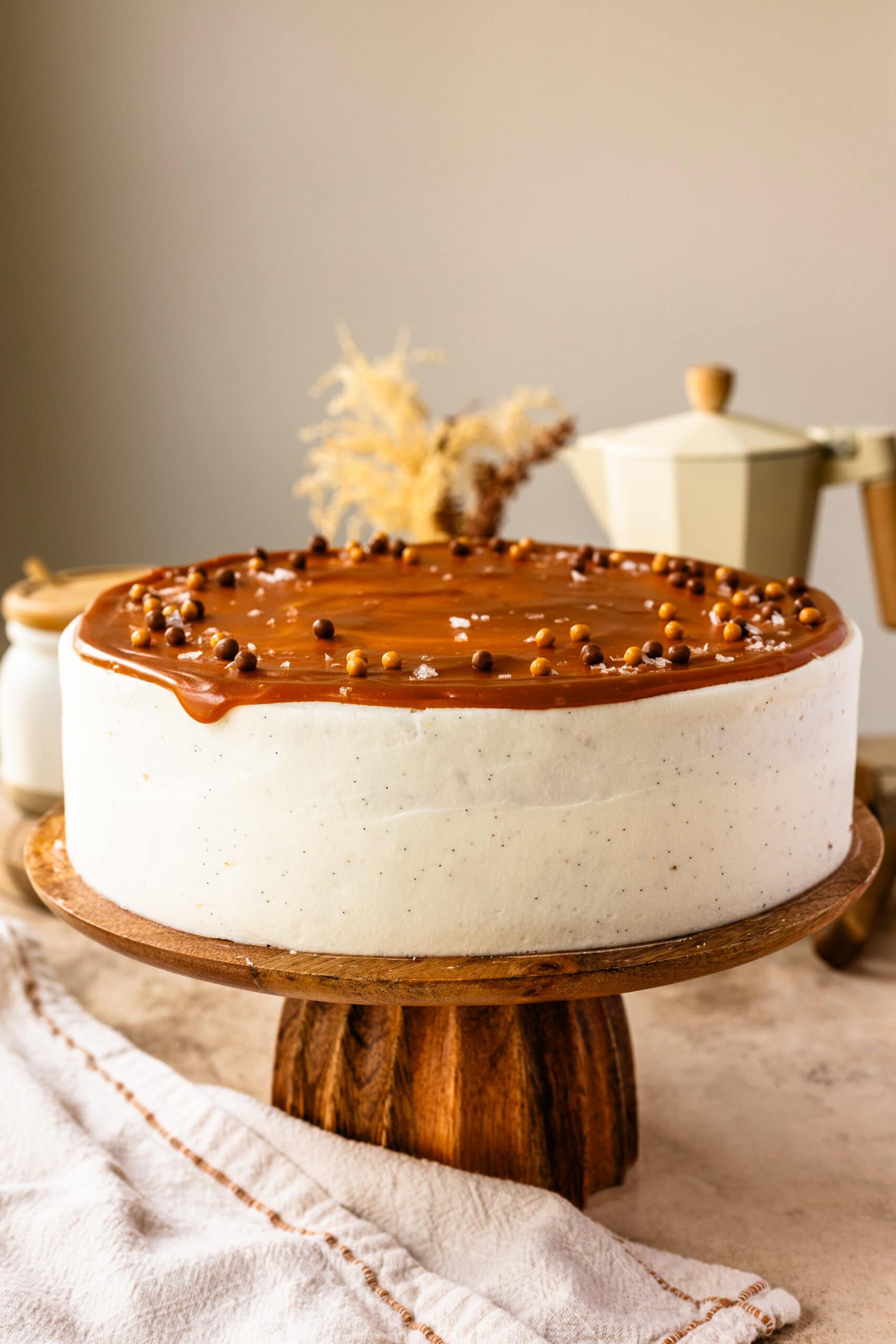
Finish the cake with crispearls, flaky sea salt, or both.
Baking Tips for Vanilla Bean Caramel Cake
A few details make a big difference when working with cake layers, soft buttercream, and caramel.
- Use room-temperature ingredients. Room-temperature butter, eggs, buttermilk, and cream cheese blend more evenly and help create a smoother batter and frosting.
- Do not overmix the batter. Once the flour has been added, mix only until it is nearly incorporated. Overmixing can make the cake layers dense or slightly tough.
- Cool the caramel completely. This is the most important assembly detail. Warm caramel can soften the frosting, escape through the buttercream dam, or make the cake layers slide.
- Chill the cake before the drip. A cold cake gives you much more control over how far the caramel travels down the sides.
- Test one drip first. Caramel consistency changes depending on the temperature. One test drip can save the entire finish of the cake.
- Use a sturdy buttercream dam. Pipe the border slightly higher than the caramel filling so the sauce remains contained once the second layer is added.
Variations
The vanilla and caramel combination is easy to adjust without changing the cake method.
Salted caramel cake: Add salt directly to the caramel sauce and finish the top with a small amount of flaky sea salt.
Dulce de leche: Replace the caramel sauce with dulce de leche for a thicker filling with a deeper cooked-milk flavor. Warm it slightly if needed so it spreads easily.
Maple vanilla buttercream: Add a small amount of maple extract to the frosting. Start with just a few drops because maple extract can quickly overpower the vanilla bean.
Bourbon caramel: Add a little bourbon to the finished caramel sauce after removing it from the heat. Let the sauce cool completely before assembling the cake.
Storage and Make Ahead
Store the assembled cake covered in the refrigerator for up to 4 days. Let it sit at room temperature for about 30 to 60 minutes before serving so the cake and buttercream can soften.
The cake layers can be baked up to 2 days ahead. Once completely cool, wrap each layer tightly in plastic wrap and refrigerate.
You can also freeze the unfrosted cake layers for up to 2 months. Wrap them in plastic wrap and place them in a freezer bag or airtight container. Thaw the layers in the refrigerator overnight before assembling.
The caramel sauce can be prepared several days in advance and kept in an airtight container in the refrigerator. Reheat it briefly until it reaches a thick, pourable consistency, then let it cool again before using.
Leftover slices can also be frozen. Place the slices in the freezer until firm, then wrap them individually and store them in an airtight container for up to 1 month.
Frequently Asked Questions
The most common causes are too much flour, overmixing the batter, or baking the layers too long. I recommend weighing the flour when possible and checking the cakes a few minutes before the suggested baking time, since ovens can vary.
The caramel is probably too warm or too thin, or the frosted cake was not cold enough. Chill the cake thoroughly and allow the caramel to cool until it moves slowly from a spoon. Always test one drip before adding the rest.
Pipe a thick, continuous buttercream dam around the edge of the first cake layer. Keep the caramel inside the border and avoid overfilling the center. Chilling the assembled cake before adding the final frosting layer also helps stabilize it.
Yes. Divide the batter evenly between three greased and lined 8-inch pans. The thinner layers will bake faster, so begin checking them around 22 to 25 minutes. Add less caramel between each layer so the finished cake remains stable.
Yes. Vanilla bean paste is a good substitute and will still give you visible vanilla specks. The exact amount depends on the brand, but approximately 1 to 2 teaspoons is usually enough for the buttercream.
More Caramel and Vanilla Desserts
For another vanilla-forward layer cake, try my Crème Brûlée Cake. My Vanilla Bean Macarons also use vanilla bean for a deeper vanilla flavor. And for more caramel desserts, you may enjoy my Caramel Cake or Caramel Cheesecake, which combines creamy cheesecake with homemade caramel sauce.
If you make this Vanilla Bean Caramel Cake, leave a comment and rating below. You can also tag me on Instagram so I can see your cake and share it.
Vanilla Bean Caramel Cake

Ingredients
- 2½ cups all-purpose flour (324g)
- 1½ tsp baking powder
- ¼ tsp baking soda
- ¼ tsp salt
- ¾ cup unsalted butter room temperature (169g)
- ¼ cup vegetable oil (60ml)
- 1½ cup granulated sugar (300g)
- 4 large eggs room temperature
- 1 tbsp pure vanilla extract
- 1¼ cup buttermilk (300ml)
Vanilla Bean Buttercream
- 2 cups unsalted butter softened (452g)
- ¾ cup cream cheese softened (170g)
- 4½ to 6 cups powdered sugar sifted (562g to 750g)
- 2 tsp vanilla extract
- 1 vanilla bean split and seeded
- Pinch of salt
Instructions
Vanilla Cake
- Pre-heat the oven to 350ºF. Grease and line 2, 9” cake pans with parchment paper.
- In a bowl, whisk together the flour, baking powder, baking soda, and salt. Set aside.
- In a large bowl, or in the bowl of a stand mixer, add the butter, oil, and sugar. Beat the ingredients together for two minutes, until the mixture is fluffy and light in color. If using a stand mixer, use the paddle attachment, or you can just use a hand mixer.
- Add the eggs, one at a time, mixing one egg completely until incorporated before adding the next one.
- Remember to scrape the bowl in between mixing.
- Add the vanilla and mix to combine.
- Add one third of the buttermilk to the bowl with the batter, mix on low to combine.
- Next, add one third of the dry ingredient mixture. Mix on low speed.
- Add another third of the buttermilk and mix.
- Follow by another third of the flour mixture, mix to combine.
- Add the remaining buttermilk, and mix. Finish with the remaining flour, add it to the bowl and mix on low.
- You can finish by folding with a spatula, to avoid over mixing the batter.
- Divide the batter between the prepared cake pans.
- Bake in the pre-heated oven for about 30 minutes, until a toothpick inserted into the cake comes off clean.
- Remove the cake from the oven. After 10 minutes, flip the cake onto a cooling rack or plate. Let the cake cool down completely. If you aren’t assembling the cake on the same day, wrap the completely cooled down cake in plastic wrap, and place in the fridge, or freezer.
Caramel Sauce
- Make the caramel sauce according to the instructions on this recipe. Let it cool down completely before using to fill the cake and spoon on top. You can make it a few days ahead. Heat it up gently in the microwave for five second intervals, stirring in between until the sauce is pourable but not too thin.
Vanilla Bean Buttercream
- In a large mixing bowl (stand mixer with paddle attachment preferred), beat the butter for 2 minutes on medium speed. Add the cream cheese and beat for another minute.
- Add the vanilla bean seeds and mix until fully incorporated.
- Reduce speed to low and add the powdered sugar, about 1 cup at a time, scraping the bowl frequently. Once all is added, increase speed to medium-high and whip for 1–2 minutes until light and airy.
- Add the vanilla extract, salt, and mix.
- If the buttercream is too soft, add more powdered sugar. And if it’s too thick, add 1-2 tsp heavy cream or milk.
Assembly
- Place one cake layer on a cake plate. If the cake has a dome on top, use a knife to level it and cut the excess off.
- Pipe some Vanilla Bean Buttercream around the edges of the bottom layer.
- Fill the center with about 1/2 cup of caramel sauce.
- Top with the other layer.
- Spread a thin layer of frosting around the sides of the cake and on top. Use a spatula to smooth it out.
- Place the cake in the fridge for 20 minutes.
- Spread a thicker layer of frosting on the cake, using a bench scraper to smooth the sides and an offset spatula to smooth the top.
- Let the cake chill for at least 30 minutes in the fridge before dripping the caramel on top.
- Slowly pour the cooled caramel over the cake. You can use a spatula to gently help it spread out. Top with crisp pearls and sea salt flakes.

Hi! Can I use 8 inch pans for this one and bake a bit longer?
Yes! You can use two 8-inch pans. The cake layers will be a little thicker, so they’ll likely need a bit longer in the oven. I’d start checking around 33–35 minutes and bake until a toothpick inserted in the center comes out clean or with just a few moist crumbs.
Thanks so such for your reply!!
I have a random question about baking cakes. How do you grease your pans? I read that not greasing it at all create leveled cakes (no domes). Which cake pans do you use?
Thanks again!
Of course! I always grease my cake pans with oil spray, then place a round of parchment paper on the bottom. I haven’t personally used the no-grease method, so I can’t really speak to how well it works for preventing doming. I usually just stick with the method that’s been reliable for me 😊 I’m also adding a link here to the cake pans I use!
Thanks again Camilla.
If I don’t have buttermilk, can I mix greek yoghurt and milk together? Would that still work?
Thanks,
Monica
es, that should work! You can mix Greek yogurt with a little milk to thin it out to a buttermilk-like consistency. Just make sure it isn’t too thick, and you can use the same amount called for in the recipe.
This cake was truly amazing! I don’t consider myself an expert cake baker by any means but this came out gorgeous and delicious!! Love the homemade caramel sauce too.
Yay thank you! I’m so happy you liked the cake!!!
Ciao posso chiederti le uova da 65 grammi se vanno bene? e il latticello lo posso fare con 150 di yogurt e 150 di latte o tutto yogurt con gocce di limone xké non lo trovo grazie mille 😘