

New York Cheesecake
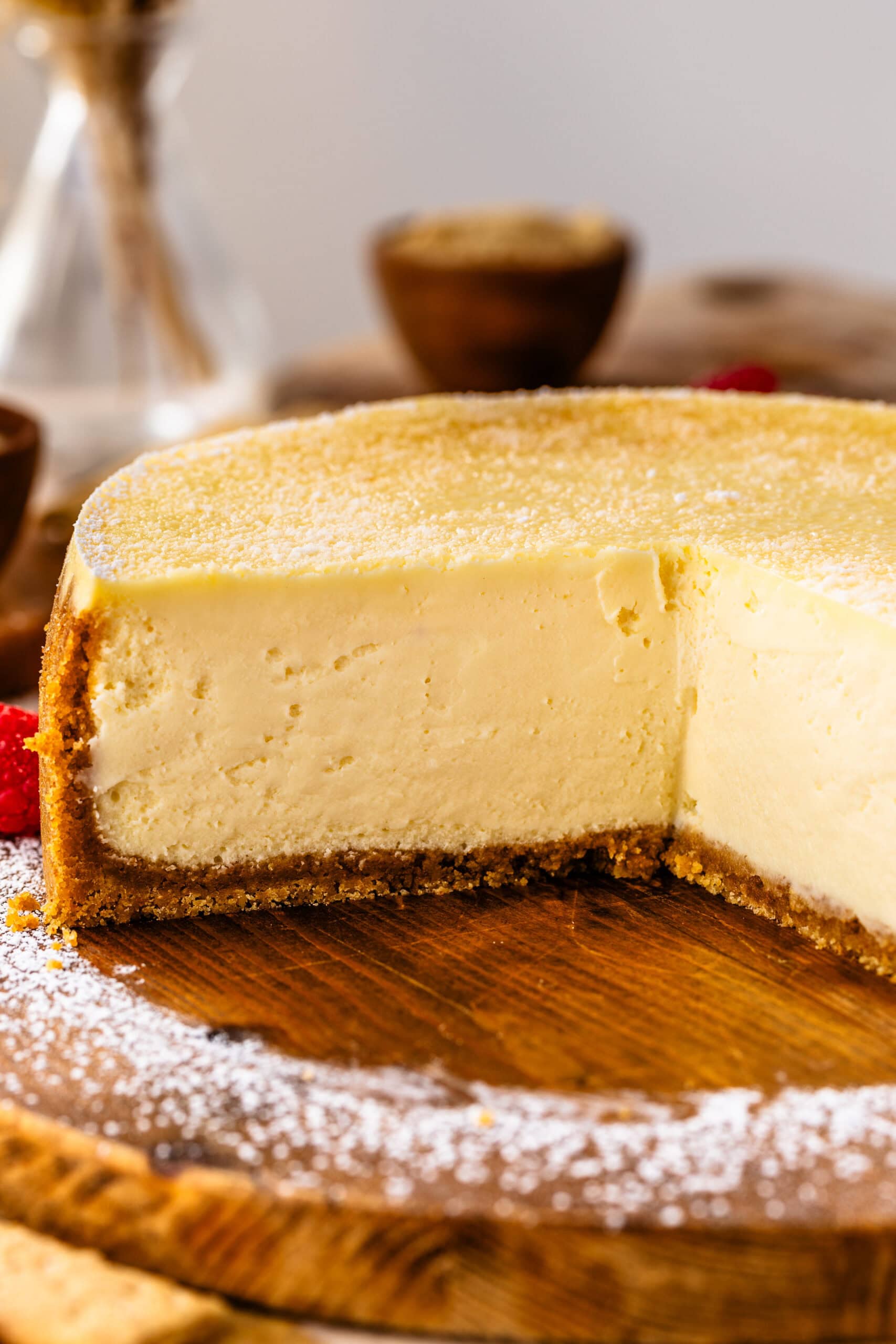
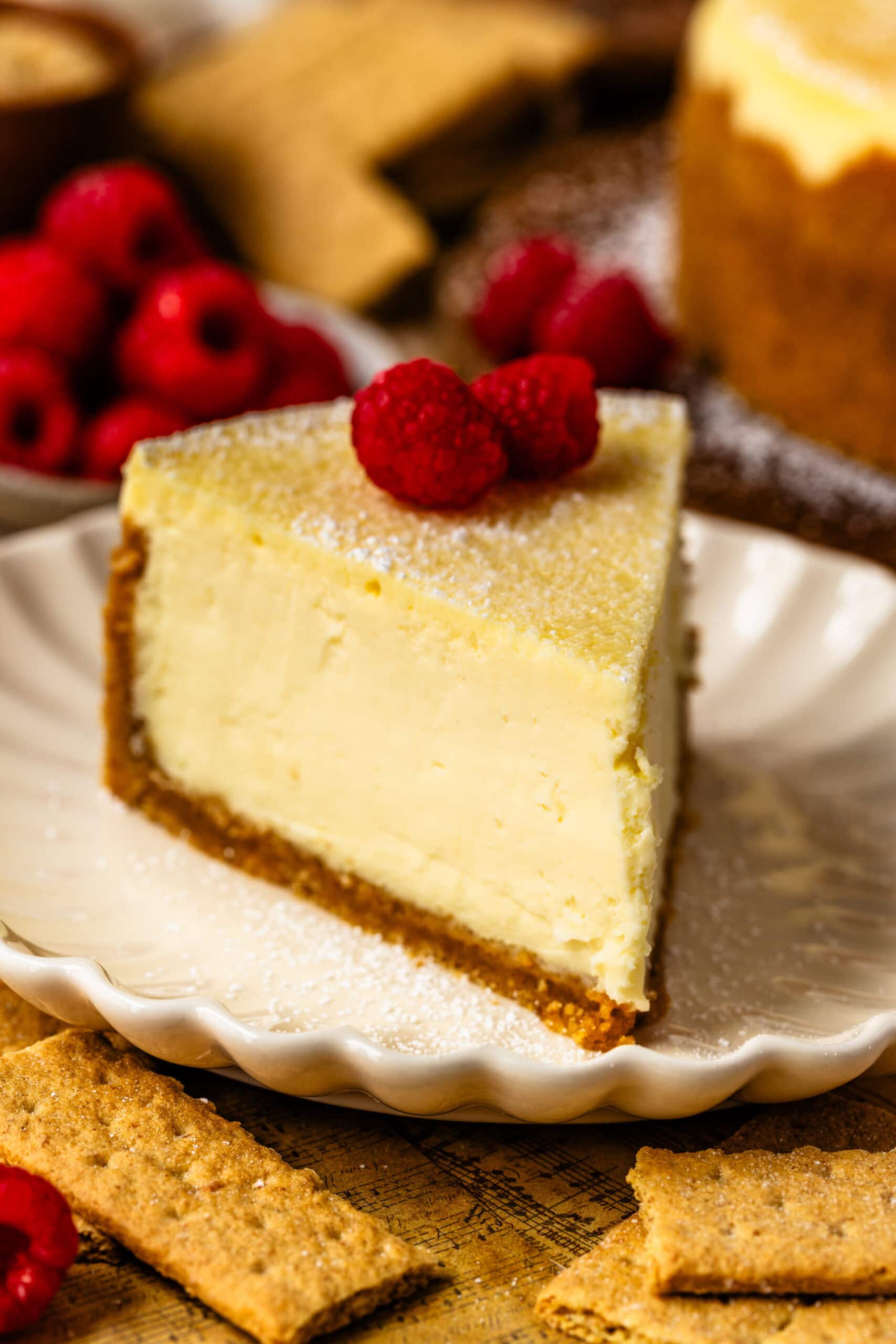
I can’t believe it took me this long to finally get a classic New York Cheesecake on the blog. This is the cheesecake I come back to again and again—rich, creamy, and perfectly smooth, with a buttery graham cracker crust and a velvety filling. It’s also the ultimate blank canvas, delicious on its own or topped with fruit, chocolate, caramel, or whatever you’re craving. I’ll walk you through the process step by step so you can make a New York–style cheesecake that turns out smooth and impressive every single time.
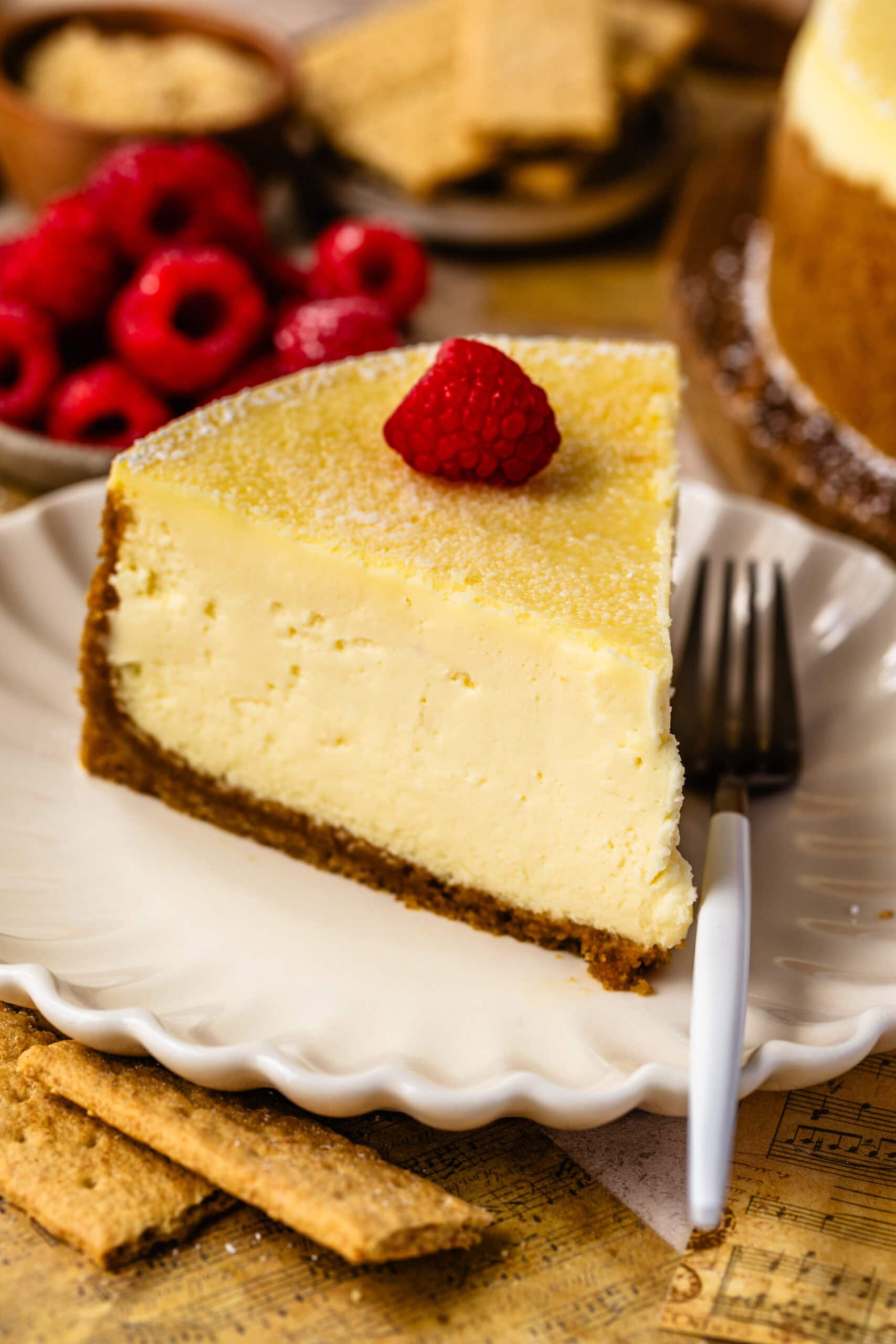
Why I Love This Cheesecake
A New York style cheescake is probably what comes to mind when you think of cheesecake. I wanted to recreate that with an easy recipe that’s approachable for anyone. This cheesecake uses a classic graham cracker crust and a sweet tangy filling that is already making my mouth water!
What goes in a Cheesecake?
Graham crackers: These form the base of the crust, adding a classic buttery crunch that pairs perfectly with the rich filling. If you want the full recipe for my graham cracker crust, click here.
This post may contain affiliate links. I earn a commission from qualified purchases. Please read our Privacy policy here.
Butter: Melted butter binds the crust together and helps it set firmly once baked.
Cream cheese: The star of a New York–style cheesecake. I use full-fat, block cream cheese for the creamiest texture.
Sour cream: Adds richness and a slight tang, while also helping create that perfect texture.
Eggs: Eggs give the cheesecake structure and help it set properly without losing its creamy consistency.
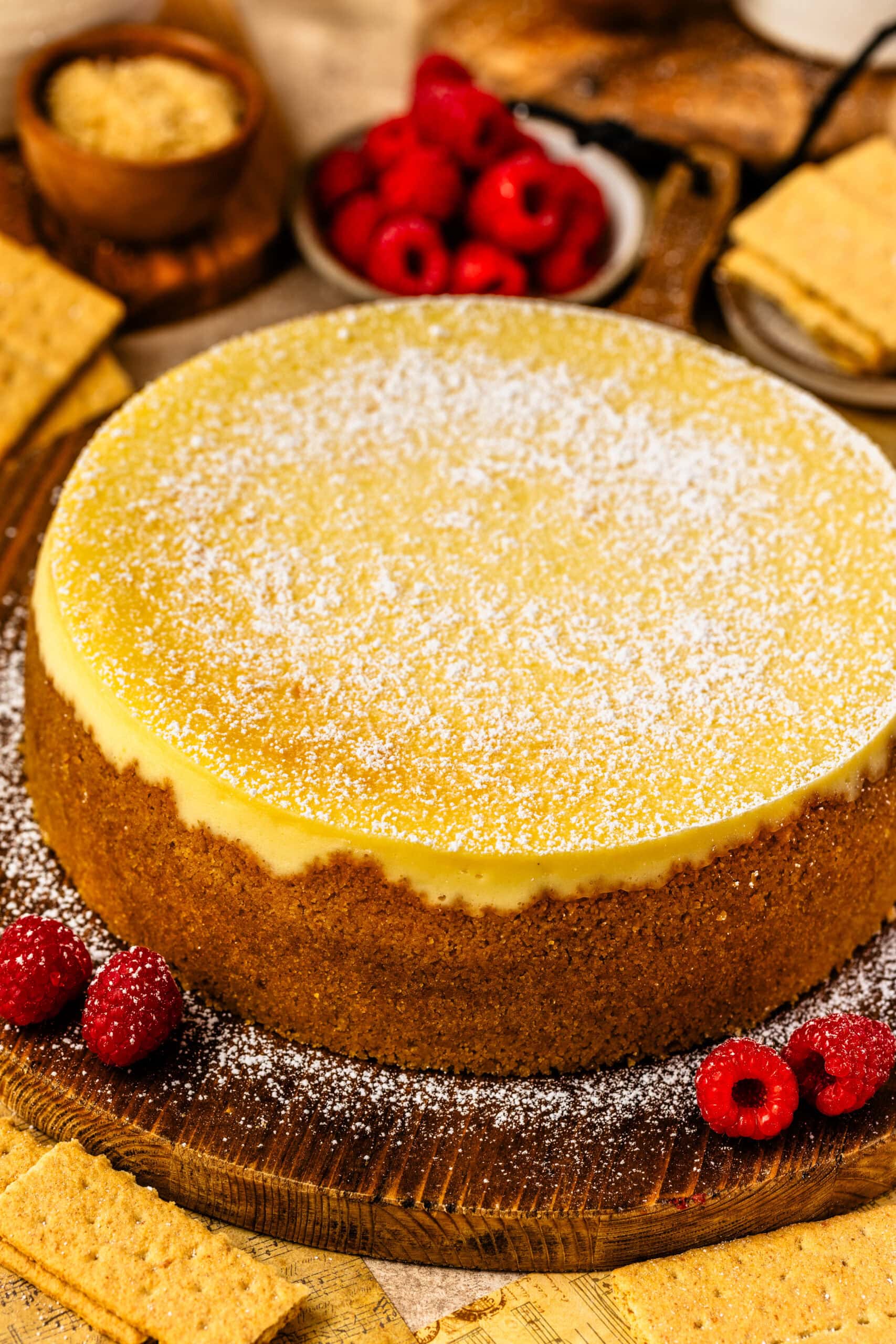
What Pan Should I Use?
Using the right pan is very important for making a good cheesecake. For this recipe, an 8” or 9” springform pan works best. If using an 8” pan, ensure it’s deep, at least 3 inches. A springform pan is ideal for easy removal and serving. I use this Fat Daddios cheesecake pan for almost all of my cheesecakes.
How to Make Classic Cheesecake
I have the full recipe amounts and instructions below in the recipe card, but keep reading to get some tips from one baker to another!
Step 1: Graham Cracker Crust
Line your springform pan with parchment paper. Ensure the sides and bottom are well-lined to prevent sticking. No need for greasing here, the crust has butter in it already and any added oil may make the crust greasy.
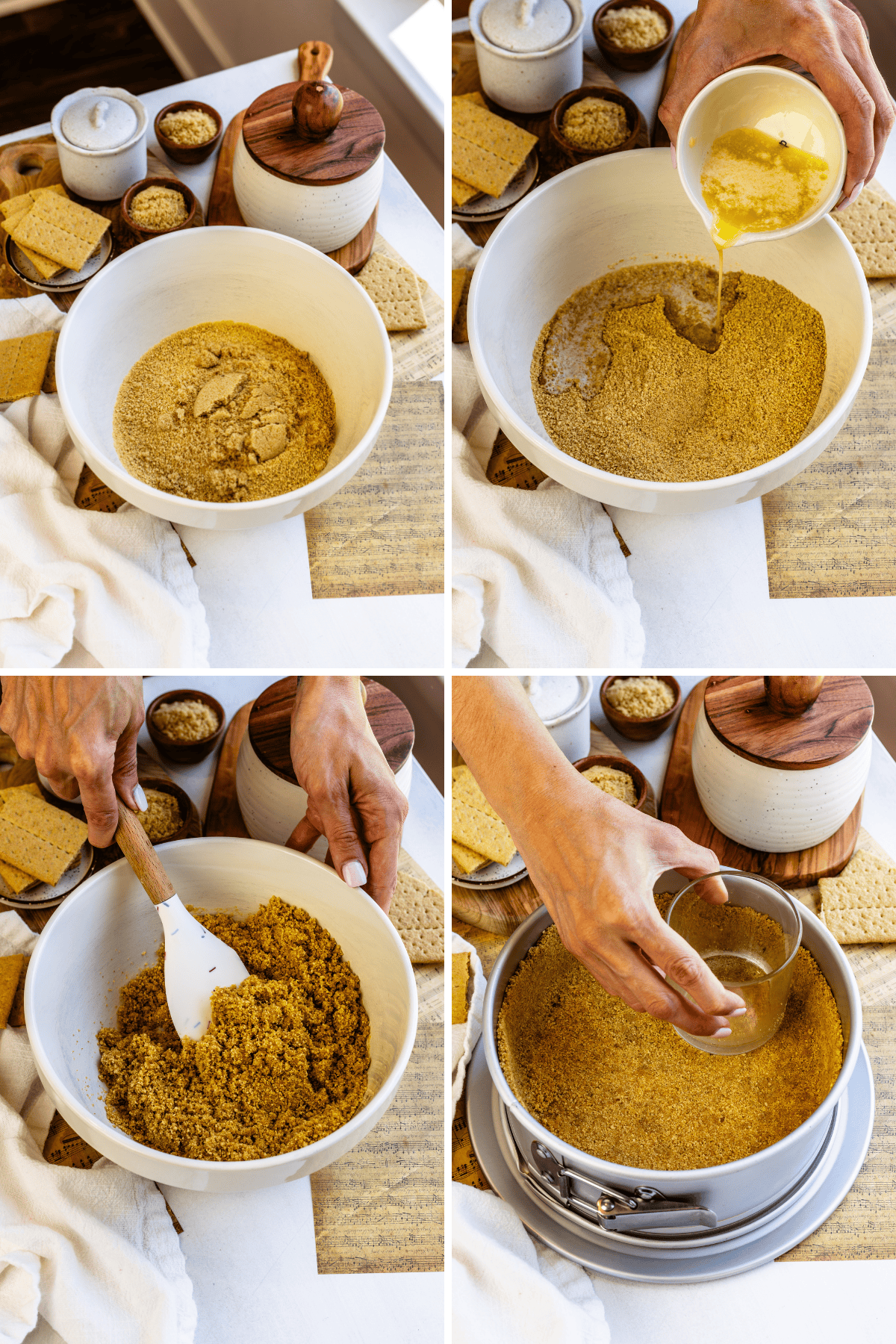
Place the graham crackers in a food processor and process until fine crumbs form. Transfer the crumbs to a bowl and mix in the brown sugar. Next, combine the mixture with the melted butter.
Press the mixture firmly into the bottom of the prepared pan with the bottom of a measuring cup so it’s uniform. Bake the crust for 10 minutes, then remove it from the oven and allow it to cool completely.
Step 2: Cheesecake Batter
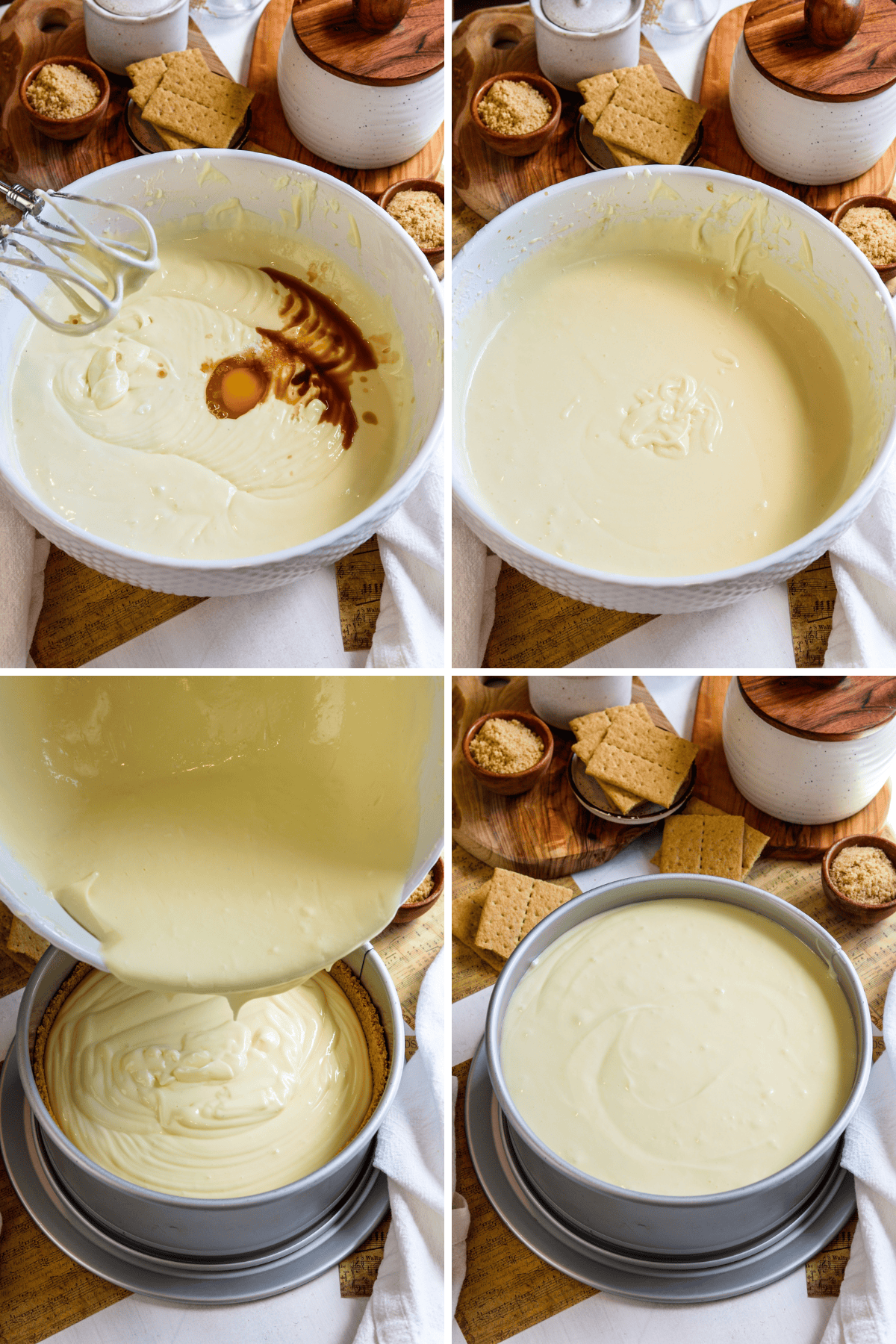
Next I take a large mixing bowl, and beat the room temperature cream cheese for about 3 minutes at medium speed until it becomes creamy. I then add the granulated sugar to the bowl and beat the mixture for an additional 2 minutes at medium speed, ensuring to scrape the bottom of the bowl with a rubber spatula and beat for another 30 seconds to avoid lumps.
Then, add the sour cream and mix until well combined, scraping the bowl as needed.
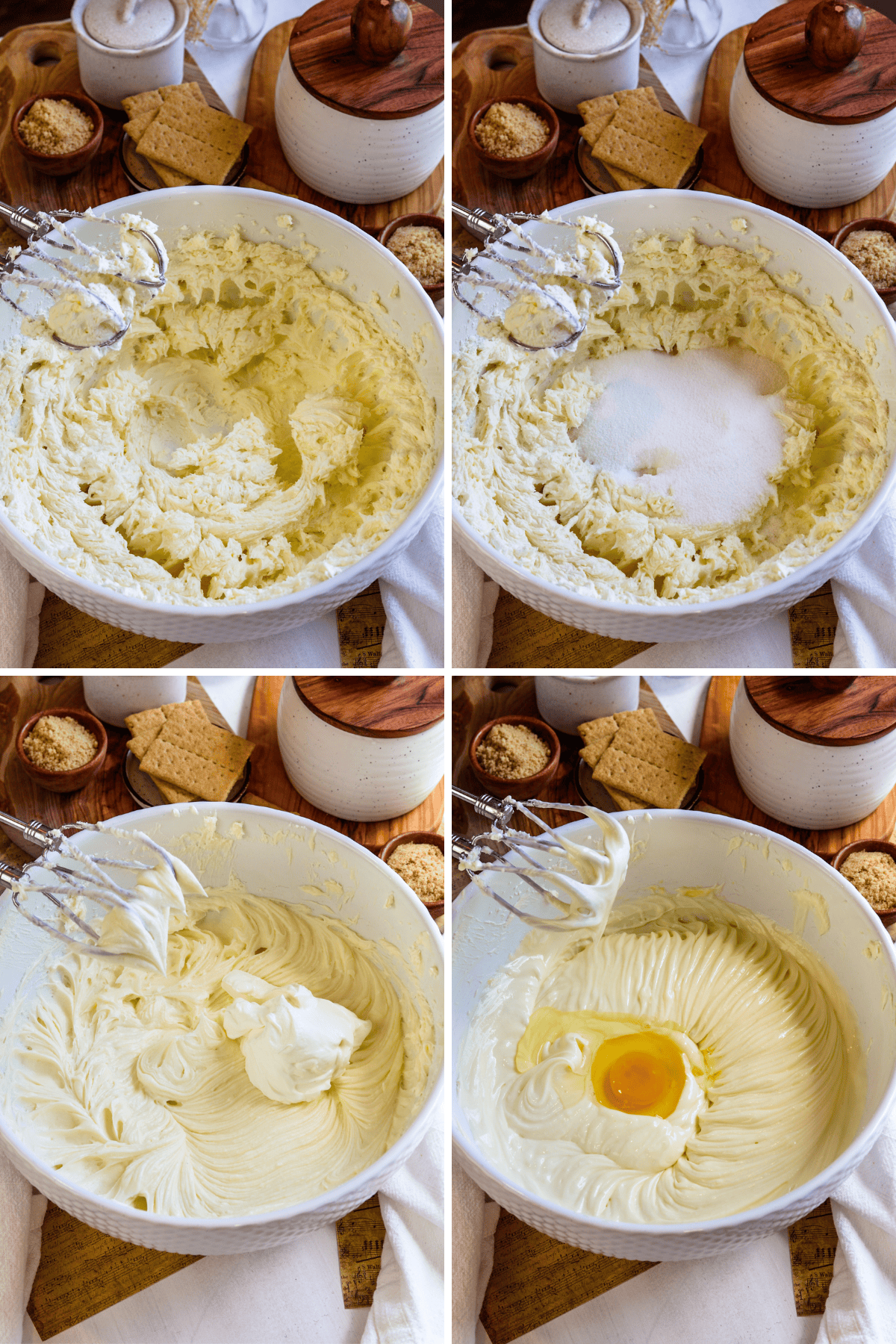
Add the eggs one at a time, mixing until each is incorporated before adding the next to prevent over-mixing. Don’t overmix the batter once the eggs are in, otherwise your cheesecake could crack!
Finally, add the vanilla extract (or vanilla bean paste) and salt, and mix briefly. Before adding the batter to pan, lightly grease the exposed sides of the cheesecake pan. Then pour the cheesecake batter over the baked and cooled graham cracker crust.
Step 3: Prepare the Pan & Bake
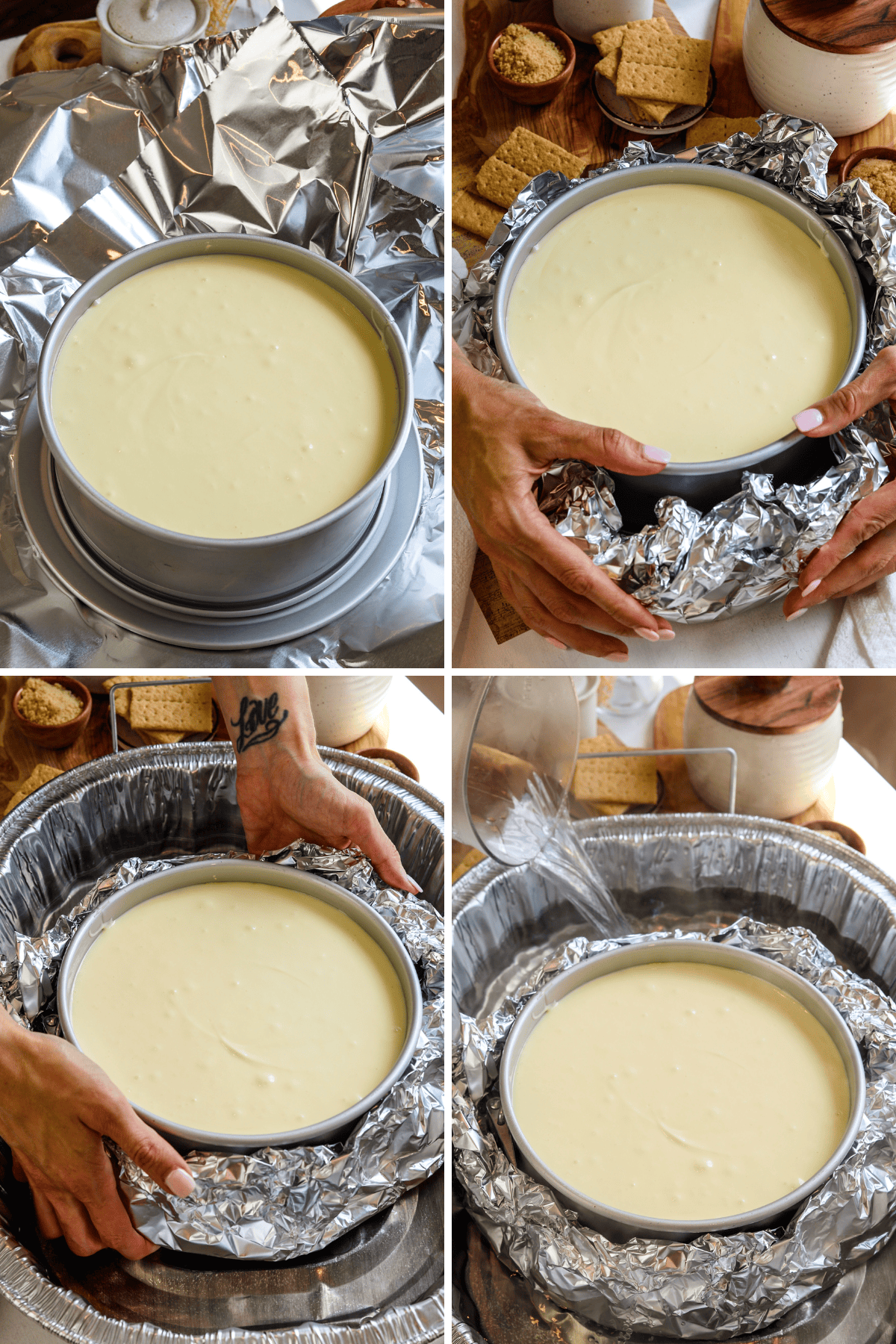
I bake most of my cheesecakes in a water bath, and this classic one is no different. Wrap the bottom of your springform pan with a few layers of aluminum foil to prevent water from leaking in.
Place the pan in a larger roasting pan and add hot water to create the water bath, which helps prevent the cheesecake from cracking.
Bake the cheesecake in the 325ºF preheated oven for 60 to 75 minutes. When the cheesecake is done it should jiggle slightly in the center but look set around the edges.
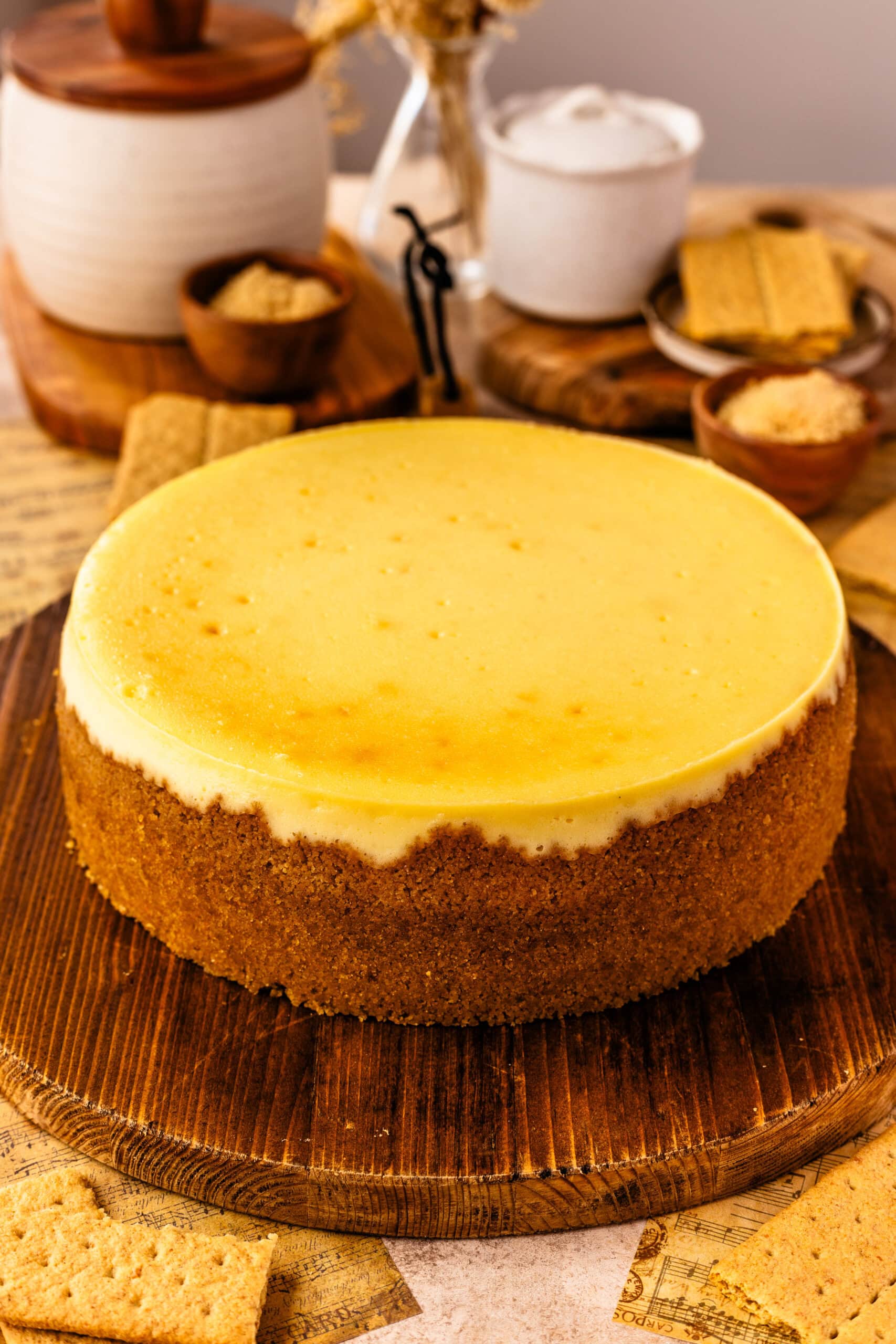
Turn the oven off and leave the cheesecake in the oven for 1 hour to cool gradually. You can slightly prop open the oven door if you like. Remove the cheesecake from the oven and let it cool completely on a wire rack before refrigerating for at least 6 hours or overnight.
Step 4: To Decorate
After the cheesecake has chilled, remove it from the fridge. Carefully remove the ring from around the pan. Decorate or slice and serve!
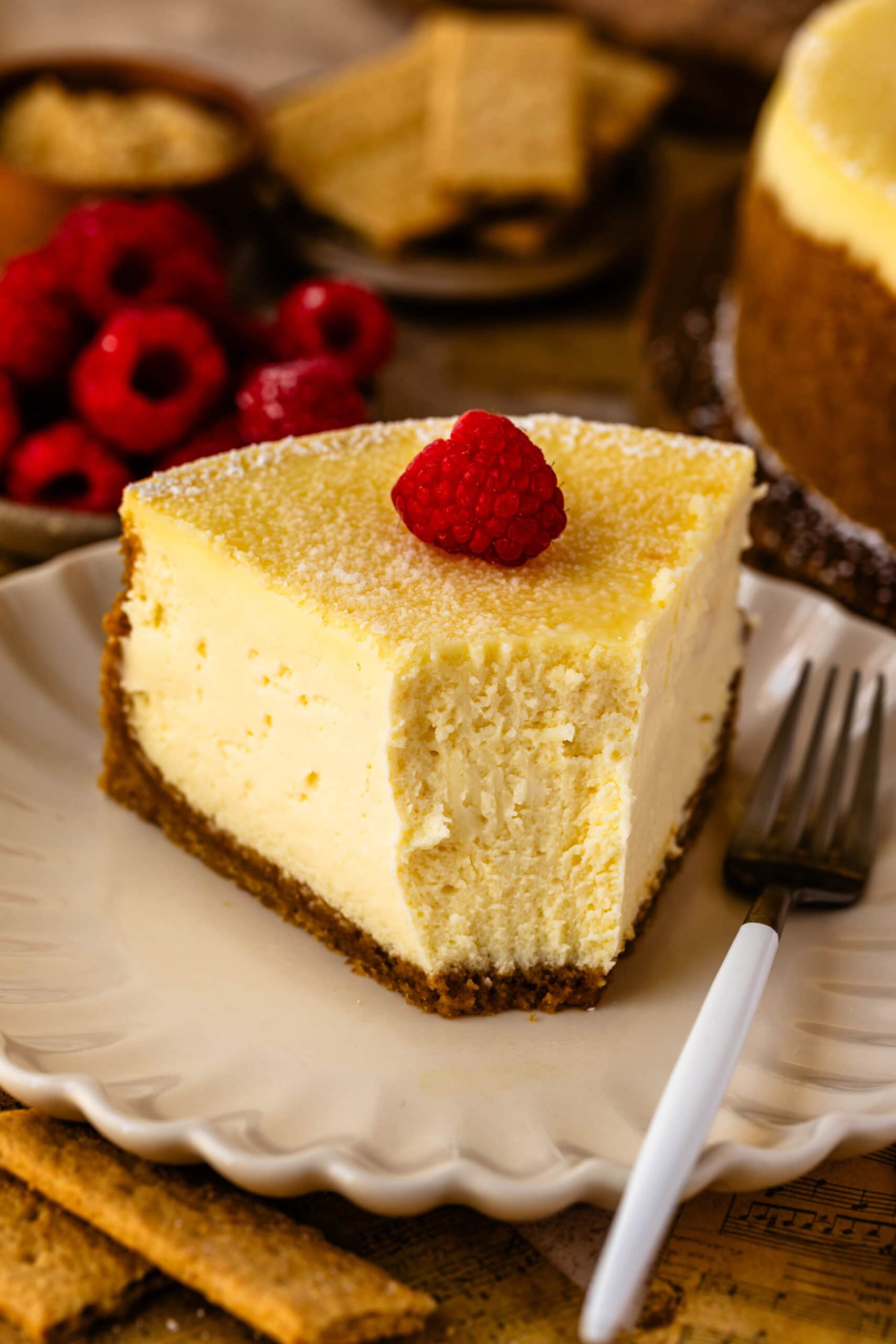
For this recipe I just dusted with a little powdered sugar and fresh raspberries. You can enhance your cheesecake even more with a variety of toppings such as strawberry sauce, caramel sauce, chocolate ganache, fruit curds (like lemon, mango, or passionfruit), dulce de leche, lemon zest, or Nutella.
Another popular topping is whipped cream, and it’s super easy to make! Add 1 cup of heavy whipping cream to a bowl of a stand mixer and whip until stiff peaks appear. You can also add a little bit of powdered sugar just before the whipped cream comes together to sweeten it up a bit.
Storage
I have this cheesecake stores best in the fridge for up to 4 or 5 days, covered in an airtight container.
You can also freeze the cheesecake for up to 2 months. To freeze, place it in an airtight container or wrap it tightly in plastic wrap and then in an airtight container.
Tips & Tricks
Making cheesecake can be challenging the first time. Check out this post for some tips!
- Crust: Digestive biscuits can be used instead of graham crackers.
- Greasing the Pan: Grease the sides of the pan after baking the crust to avoid making the crust soggy.
- Mixer: A hand mixer is recommended as it allows for better scraping of the bowl, preventing lumps in the batter.
- Oven Temperature: Use an oven thermometer to ensure accurate baking temperature. Convection ovens may require a lower temperature (around 300ºF).
- Add a little Lemon: Add a couple of tablespoons of lemon juice to the cheesecake batter to enhance the tangy flavor!
- Avoid Over-Mixing: Over-mixing the batter, especially after adding the eggs. Over mixing can create air bubbles that will cause the cheesecake to crack.
Variations
Cheesecakes are one of my specialities, and this recipe is pretty much a base for all cheesecake flavor combinations. I have SO many recipes on the blog, so go check them out if you want something a little different.
FAQs
New York cheesecake is known for its dense, rich, and creamy texture, usually made with full-fat cream cheese and minimal add-ins for a clean, classic flavor.
A water bath is recommended for New York cheesecake because it helps the cake bake evenly and reduces the chance of cracks, but it’s not strictly required if you’re careful with temperature and cooling.
Cracks usually happen from overmixing the batter, overbaking, or cooling too quickly. Letting the cheesecake cool gradually in the oven helps prevent this.
For the best texture, chill the cheesecake for at least 6 hours, but overnight is ideal.
Try Some of My Other Cheesecakes
If you’re in the mood to change things up, be sure to try some of my favorite cheesecake variations. My Pistachio Cheesecake is rich and nutty with real pistachio paste, while my Caramel Cheesecake is ultra-creamy and finished with a deep, buttery caramel topping. For something cozy and indulgent, this Cinnamon Roll Cheesecake swirls warm cinnamon sugar through a classic filling, and finally, this Crème Brûlée Cheesecake combines a silky cheesecake base with a crisp caramelized sugar top.
New York Cheesecake

Ingredients
Graham Cracker Crust
- 1 1/2 cups graham cracker crumbs 180 grams, or digestive biscuits
- 1/4 cup brown sugar 55 grams
- 6 tbsp unsalted butter melted (85 grams)
Cheesecake batter
- 907 grams cream cheese softened (4 packages of 8 oz.)
- 1 1/3 cup granulated sugar 266 grams
- 1/2 cup sour cream 120 grams
- 4 large eggs room temp
- 1/2 tbsp vanilla extract or vanilla bean paste
- 1/2 tsp salt
Instructions
Graham Cracker Crust
- Pre-heat the oven to 325ºF.
- Place the graham cracker in a food processor and process to obtain fine crumbs.
- Add the brown sugar and mix to combine.
- Melt the butter and mix with the crumbs and sugar.
- Press the mixture on the bottom of an 8” or 9” cheesecake pan. If using an 8” springform pan, it must be deep.
- Bake the crust in the oven for 10 minutes.
- Remove it from the oven and let it cool down.
Cheesecake Batter
- Grease the sides of the cheesecake pan. (Read notes)
- Beat the cream cheese for 3 minutes with a mixer at medium speed, until creamy.
- Add the granulated sugar to the bowl.
- Beat the mixture for 2 minutes at medium speed.
- Scrape the bowl and beat for another 30 seconds.
- Add the sour cream and mix to combine. Scrape the bowl.
- Make sure to scrape the bowl a few times during the mixing process, to avoid the cream cheese from forming lumps in the batter.
- Add the eggs one at a time to the bowl, mixing until incorporated before adding the next one.
- Avoid over mixing once the eggs are added, to prevent cracking of the cheesecake.
- Add the vanilla extract (and or vanilla bean paste), salt, and mix briefly.
- Pour the cheesecake batter in the pan, over the baked and cooled crust.
- Wrap the bottom of the pan with a few layers of foil.
- Place the pan in a larger roasting pan, and add hot water to the roasting pan, to form a water bath. This is very important so the cheesecake doesn’t crack.
Baking
- Bake the cheesecake in the pre-heated 325ºF oven for 60 to 75 minutes.
- To check if the cheesecake is done baking, give the pan a little wiggle, it should jiggle slightly in the center, but the edges should look set.
- Turn the oven off, and leave the cheesecake in there for 1 hour.
- Remove the cheesecake from the oven, let it cool down. Don’t remove the ring of the pan yet, place the cheesecake in the fridge to chill for at least 6 hours.
To decorate
- After the cheesecake has been done chilling, remove from the fridge. Remove the ring from around the pan.
- Slice and serve.

If I want to make in a 6″ springform pan what will be the recipe for it. How much quantity do i use for each items? By the way your recipes are really great
Hi Kathija, thank you so much! I’m so happy you enjoy my recipes. I’d cut the recipe in half, but you might still have a few scoops leftover that won’t fit in the pan. I’d fill the pan up to 3/4 of the way, then I’d bake the remaining batter in a cupcake tin or a ramekin not to waste it. I have done this often, sometimes even without the crust lol when it comes out of the oven, I wait a bit and eat it even warm haha it’s like a treat! 🙂